
Insights
The Digital Product Passport will change textiles, but perhaps not in the way people expect
Back to InsightsA passport for the product
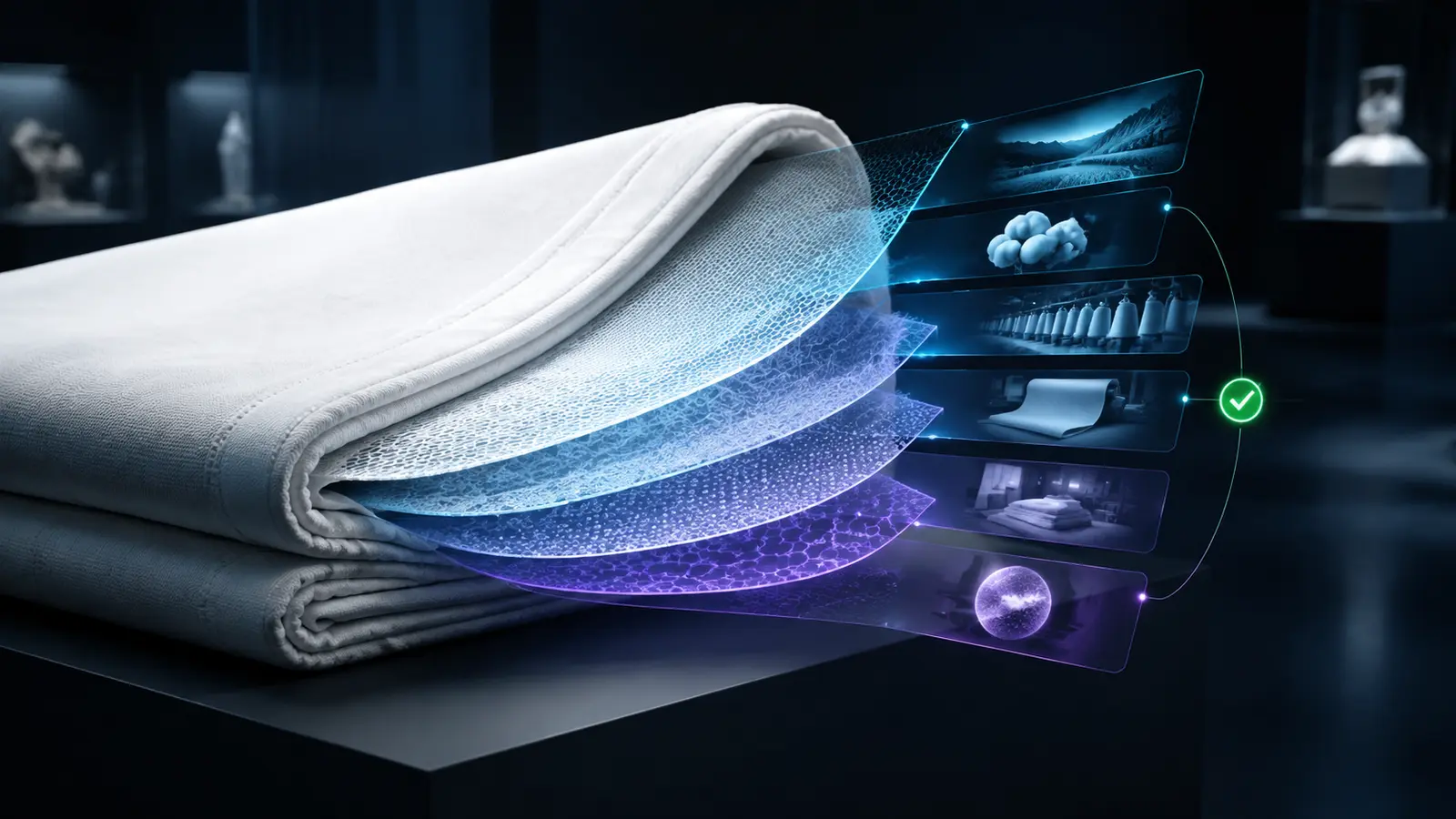
The Digital Product Passport is increasingly appearing in conversations about the future of textiles in Europe. At its simplest, the idea seems straightforward. A textile product will have a digital identity through which information about what it is, what it contains, where it came from and, eventually, how it should be repaired, reused or recycled can be accessed. For an industry moving towards greater traceability and circularity, that makes considerable sense. But there is an important distinction between knowing what a textile is and knowing what happened to it.
Product information and operational history
Imagine two identical bath towels manufactured on the same day. They contain the same fibres, were produced in the same factory and have exactly the same environmental characteristics when they leave it. One enters a hotel and remains in productive circulation for years. The other disappears after a few months. From a product-information perspective, they are identical. From a sustainability perspective, they have had very different lives.
This is where the Digital Product Passport becomes particularly interesting for hospitality. Hotels and laundries do not deal with textiles only as products. They operate enormous populations of individual articles that continuously move, are washed, reused, damaged, replaced and eventually withdrawn. The manufacturer knows how the towel was made. But the hotel and laundry create much of the information about what happens next.
How long did the textile remain in circulation? How many laundry cycles did it complete? Did it achieve anything close to its expected useful life? Why was it withdrawn? Could it be reused elsewhere? And, when it finally becomes waste, what is actually available for recycling? That operational history could eventually be enormously valuable. There is, however, a danger in getting ahead of regulation.
Value before regulatory detail
The exact information requirements, technical architecture and implementation timetable of the Digital Product Passport for textiles are still evolving. It would therefore be unwise for hotels to make technology decisions today based on assumptions about exactly what future regulation will require. But they don’t need to. The more interesting opportunity exists independently of regulation.
Giving textiles a digital identity and building reliable information about their operational life already has value. It can help hotels understand lifespan, consumption, loss and replacement. It can help laundries understand processing and durability. It can help manufacturers learn how products actually perform after leaving the factory. If some of that information later becomes useful, or required, for a Digital Product Passport, the operational foundation already exists. This also reinforces an important distinction we have made throughout this discussion: ownership is not the same as control.
Shared lifecycle responsibility
A rented textile may legally belong to the laundry, while its useful life is jointly created by the manufacturer that made it, the laundry that processes it and the hotel in which it is used. A meaningful circularity model therefore cannot stop at the boundary of ownership. Information needs to travel with the textile. Perhaps that will ultimately be one of the most important consequences of the Digital Product Passport.
Not another label. Not another database created simply to satisfy a regulatory requirement. But a reason to connect information that today becomes fragmented as a textile moves from manufacturer to laundry, hotel, reuse and eventually recycling. The Digital Product Passport may tell us what a textile is. Connected Textile Management can help us understand what happened to it. And for a genuinely circular textile economy, we will probably need both.