
It Is Time to Make Hotel Textiles Visible
Why one of hospitality’s most persistent operational blind spots is ready to become a managed system.
To hospitality leaders,
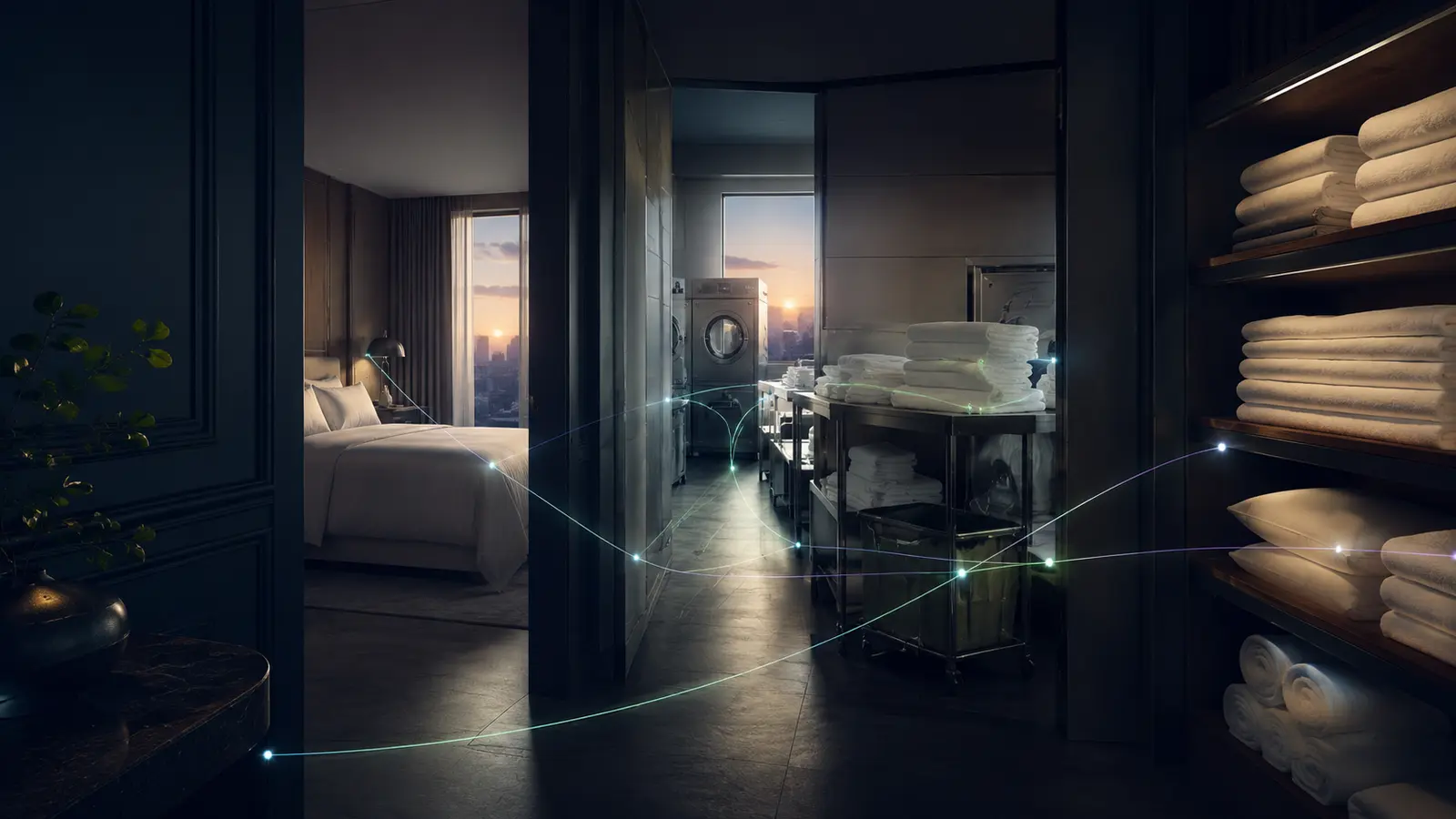
Over the years, I have been struck by a curious contrast. Hotels manage rooms, revenue, energy, labour and guest feedback with increasing precision, yet one essential operating system—textiles—often becomes almost invisible once it begins to move. Linen, towels and uniforms circulate continuously between floors, departments, laundries and properties. Whether hotels own, rent or combine both models, these items affect guest experience, housekeeping productivity, cost and sustainability, while the information needed to manage them often remains fragmented, delayed or based on estimates.
This is not a failure of effort. Hotel teams and laundry partners work hard every day to keep operations moving; it is a failure of evidence, with too few reliable signals arriving too late to support confident decisions. Today, durable connected labels, practical reading infrastructure and cloud-based analysis can create an operational record of textile movement without asking teams to redesign their working day. The technology matters, of course, but only because it can make better management possible and give people a clearer basis for action.
A more visible system
Fides grew from that conviction. Its purpose is not to produce more dashboards, but to turn movement into evidence: to reveal unusual loss, delay or imbalance; help hotels understand availability, circulation and lifecycle; and give hotels and laundries a shared basis for better conversations. That shared evidence is important because the objective is not to allocate blame. It is to replace uncertainty with a clearer view of the whole system, allowing hotel teams and laundry partners to improve availability, accountability and service together.
Operational control should not be confused with ownership. A hotel may own its textiles, rent them or combine both models. The commercial arrangement changes who funds the pool and who can realise particular benefits, but it does not change the operational requirement: clean, suitable textiles must be available in the right place at the right time. Ownership changes the economics; it does not change the need for visibility, accountability and control, or the consequences for the hotel when availability breaks down.
That is why we begin with a property-specific baseline, identify who bears each cost and who can realise each benefit, and validate the business case before considering wider deployment. I have never believed that generic promises are enough. The same discipline applies to sustainability: extending useful textile life, reducing unnecessary replacement and creating dependable lifecycle records are practical actions today, while also preparing organisations for a future in which product identity, traceability and credible evidence of responsible resource use will matter increasingly.
I do not believe hospitality needs another technology initiative for its own sake. I do believe it is time to bring a long-overlooked operating system into view and manage it with the same clarity expected elsewhere in the business. If textiles can be made visible, they can be managed; and when they are managed well, hotel operations become more resilient, more economical and more responsible. That, quite simply, is the reason we created Fides and the standard we continue to work towards.
José Vilabella
Founder & CEO, LossLess Group