Signal
A textile identity responds at an operational checkpoint.
 Book a Fides demo
Fides connects textile identity, operational evidence and management accountability, so hotels can control availability, circulation, loss, lifecycle and cost across every ownership model.

Every room-ready sheet and towel sits inside a wider system of stock, handoffs, labour, cost and service risk.
A textile identity responds at an operational checkpoint.
Identity, place, time and state become a trusted event.
Expected flow, duplicates, gaps and exceptions are resolved.
Events are compared with demand, history, policy and contract.
Investigate, rebalance, improve, replenish, or deliberately accept.
Fides is not a generic asset tracker adapted to hospitality. Its workflows, measures and exception logic are designed around the textile operating system.
Understand stock in circulation, movement history, age, usage and retirement status.
Reconcile dispatch, receipt, turnaround, rejects, rewashes and invoice evidence.
Replace inherited PAR assumptions with demand, circulation, variability and service risk.
Surface shortages, late returns, unexplained variance and tag-performance patterns, with prompts for corrective action.
Create useful insight during phased tagging, mixed-stock periods and real-world read variation.
Forecast future need using stock evolution, lead time, usage patterns and deliberate buffers.
A laundry dispatch, a pantry stocktake and a workwear desk each ask something different of a reader. Fides brings these checkpoints into one operational picture. Start with the route your textiles take, then choose the equipment that fits the volume, the space and the people doing the work. Handheld readers provide everyday flexibility; fixed readers add dedicated checkpoints where the operation needs them.
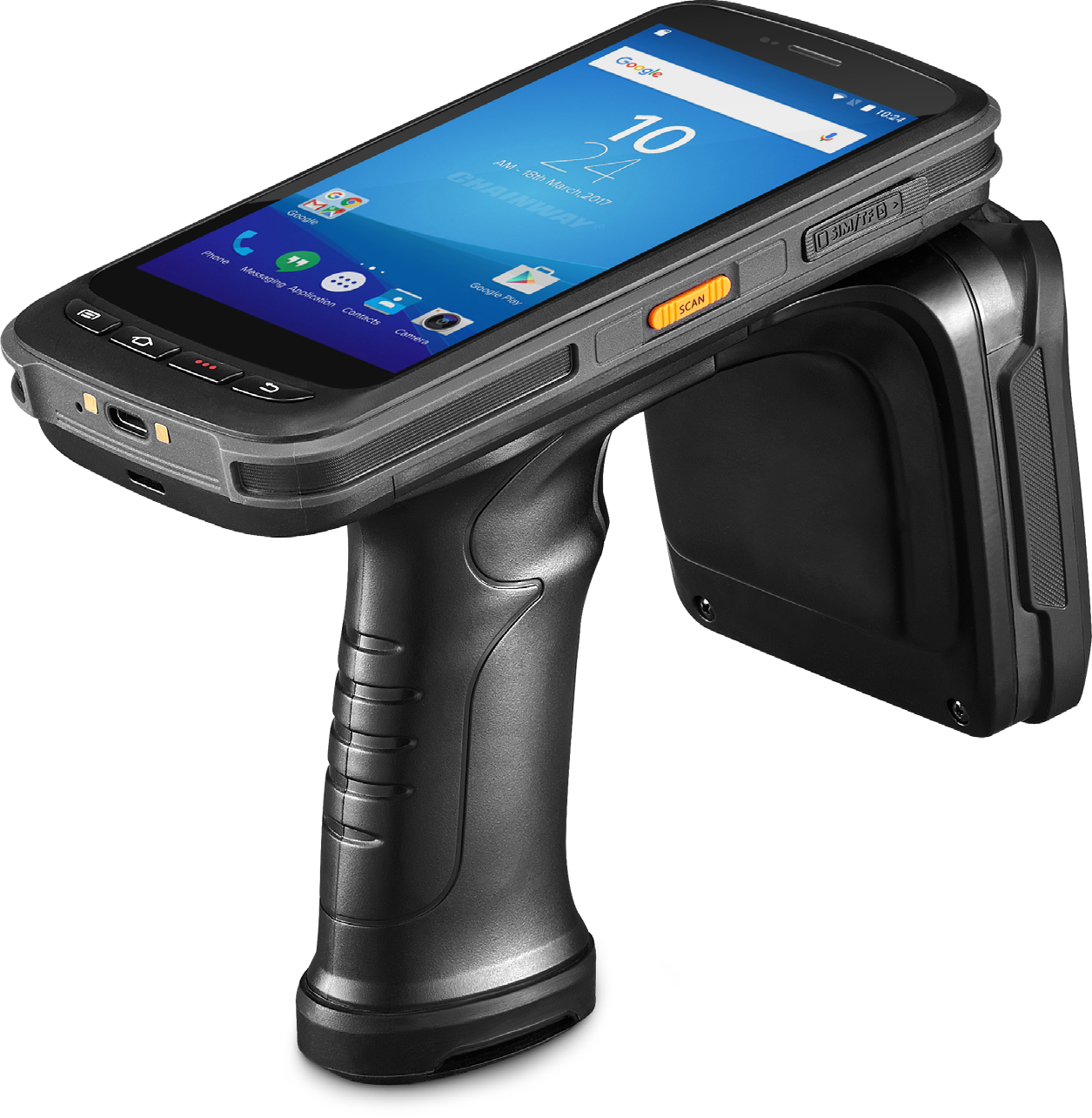
Our most commonly used handheld is robust, reliable and powerful for its compact size, with a durable rugged outer shell. The C72 brings the reading point to the work in small and large hotels, laundries and distribution vans. Use it for daily stocktakes and operator-led textile checkpoints wherever a dedicated fixed reader would not follow the team.
Model: Chainway C72. The manufacturer image retains its original screen. It does not demonstrate an implemented Fides interface. Confirm the supplied device configuration and compatible application before operational use.
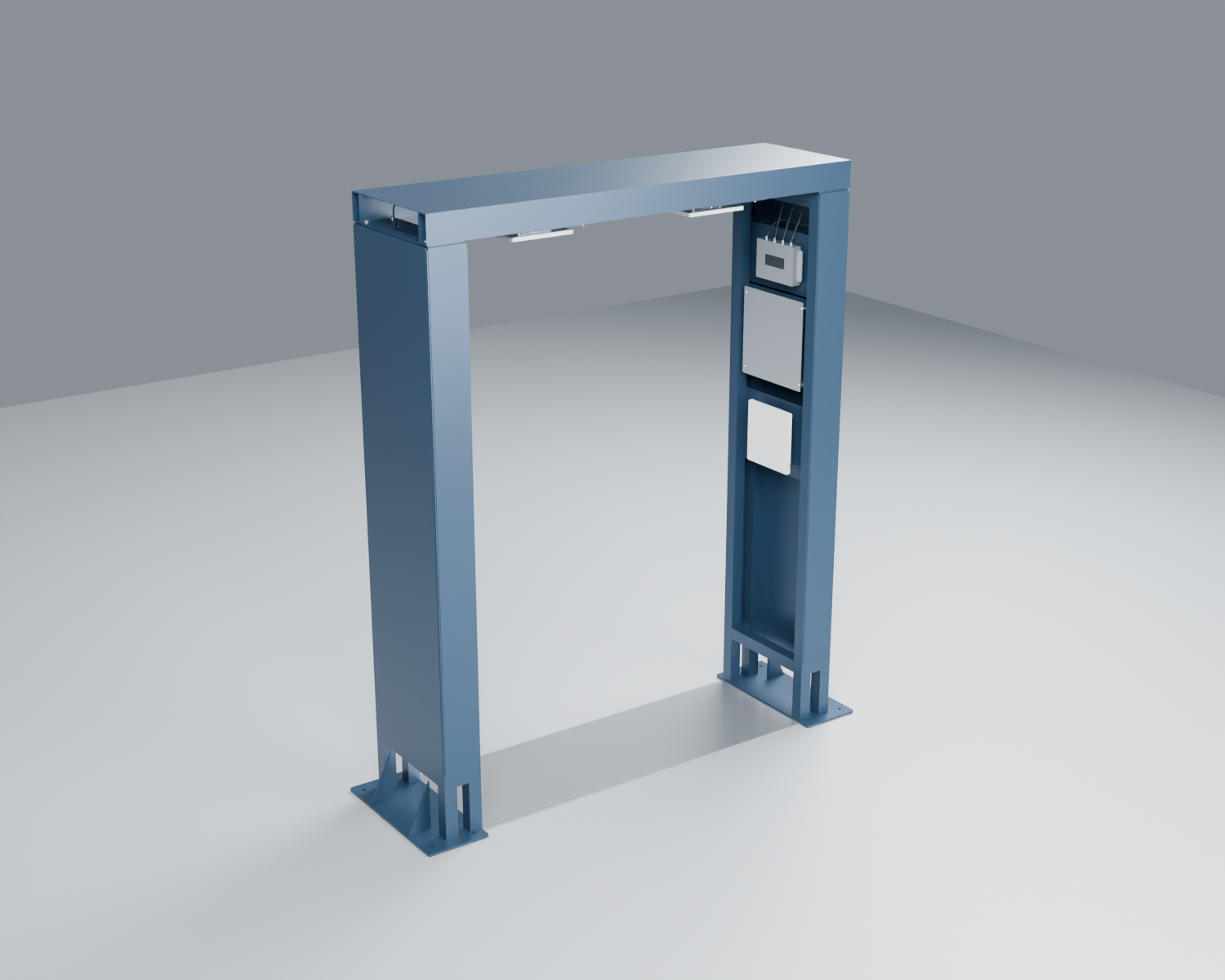
Our largest industrial fixed reader is designed for high-volume textile locations. The developed three-piece portal combines a cased Chainway U300 with four Times-7 A5010 antennas and a 1500 × 2100 mm clear passage. It creates a dedicated reading point at the central laundry dispatch area while handhelds remain available for stocktaking and other checkpoints.
Development designs, not fabrication approval or proof of production integration
This is LossLess selection guidance, not a manufacturer cutoff or throughput guarantee. Layout, loaded trolleys and site reading trials determine the final fit. The R01 assembly remains a development design. Tablet or Android control is intended, with integration still to be verified.
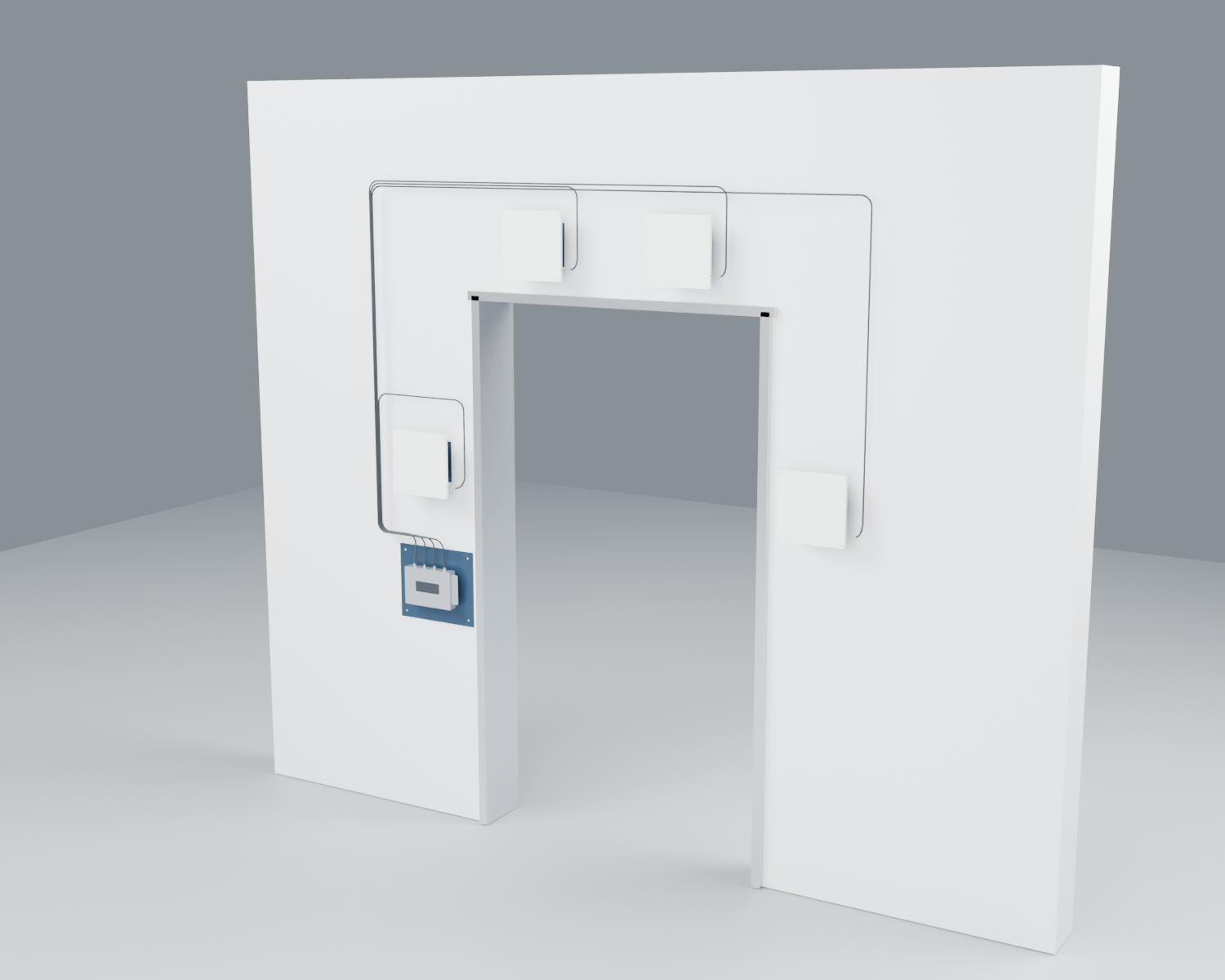
An intentionally screenless, always-on reader is designed for optional Textile Movement Monitoring at personnel entry and exit points and Gym/SPA dressing-room exits. Four antennas form the main configuration; three are a documented variant. Each actual doorway is assessed individually, so the placement follows its opening, door movement and site reading trial.
Development designs, not fabrication approval or proof of production integration
Acquisition is designed to remain independent of an open screen. Passage evidence does not identify a person or by itself prove direction. Under the agreed software rules, established departures from permitted areas can produce visual or sounding alarms while the monitoring console is open. Background phone alarms are not implied. Hardware and integration require validation.
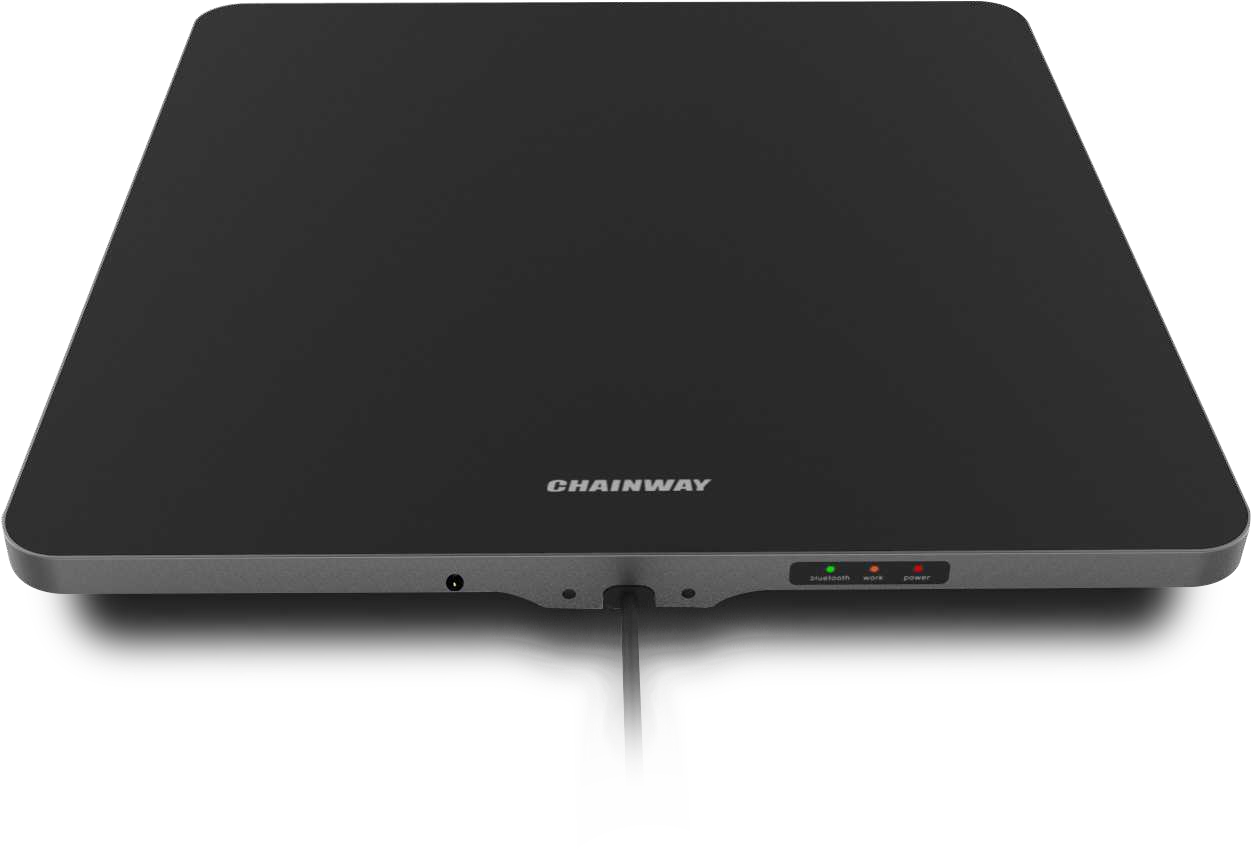
The R3 is a convenient integrated desktop RFID reader for workwear assignment. Connected to the computer with USB-C, it gives the garment desk a dedicated reading point as staff issue and assign workwear. It complements the handheld readers used elsewhere in the operation and keeps desktop garment scanning close to the assignment workflow.
Model: Chainway R3. USB-C describes the computer connection. It does not establish smart-card compatibility, driverless operation or a universally sufficient single-cable power arrangement. Confirm the reader configuration, power and software integration for the intended workstation.
Devices are presented individually, not at a common scale
Choose by workflow and location. A fixed installation complements the handhelds that move with your team.
| Reader | Setting | Daily role | Selection guidance |
|---|---|---|---|
| Handheld RFID reader | Small and large hotels, laundries, distribution vans | Dispatch, reception and daily stocktakes | At least two per site |
| Industrial RFID portal | High-volume central laundry dispatch | A dedicated fixed reading checkpoint | More than 250 rooms and one central dispatch area |
| Wall-mounted RFID reader | Personnel entry/exit and Gym/SPA dressing-room exits | Textile movement at equipped boundaries | Optional, with an individual doorway survey |
| Desktop RFID reader | Workwear issue and collection desk | Garment scanning for employee assignment | Computer via USB-C; identification and software separately |
Begin with everyday reading, then add fixed checkpoints where they serve a clear purpose. The installer assesses the actual space, network and textile loads before confirming the configuration.
Plan at least two C72 readers per site. A portal at central dispatch does not replace daily stocktakes in pantries or flexible reading in vans.
Consider the portal where more than 250 rooms share one central laundry dispatch area. Assess every monitored personnel or Gym/SPA exit separately.
Fixed readers belong indoors, in dry conditions without weather, water or excessive humidity exposure. The supplier and installer confirm mounting, power, network and on-site reading trials.
The portal is designed for control from a fixed tablet or an authorised Android phone on the same site network, including existing housekeeping Android terminals. The aim is simpler installation, fewer exposed components and lower cost. No integral display is required. The reader performs RFID acquisition; the authorised device provides the intended operator interface.
This control integration still needs implementation and testing. Network and SDK support alone do not provide a working browser console simply by joining Wi-Fi. The wall reader is designed to remain screenless and always on, with acquisition independent of an open operator screen.
Tell us about your laundry routes, stocktaking routine, workwear desk and the boundaries you want to monitor. We will bring the equipment and installation requirements into the same conversation.
Authorised access required · Installation resources in English · Engineering files remain in the protected library
C72 and R3 imagery © Chainway. Portal and wall images: LossLess Technical Development Team, led by José Vilabella. Chainway and Times-7 components retain manufacturer ownership.
THE QUESTIONS BEHIND BETTER DECISIONS
Understand whether your PAR matches actual usage, how quickly textiles return from the laundry, how long your stock will last and what you will need to purchase over the next year.
With Fides, the data behind these decisions is one click away.
Explore the questions your textile operation should be able to answer

See the volume of textiles in circulation, whether they are hotel-owned or supplied by the laundry as rental stock. Understand your textile pool by article and operational status.
Stock Overview
Compare textile consumption with the PAR available for use and the PAR your operation requires. That requirement accounts for laundry turnaround, safety stock and operational variability.

See the average time between sending textiles to the laundry and receiving them clean. Read turnaround alongside stock availability and service consistency.
Laundry State of Service
Translate available stock into estimated operating days using current daily consumption. Understand how long your inventory can sustain operations before a shortage occurs.

Review projected purchases based on consumption, losses, damage and stock health trends. Use Annualised Stock Needs to support procurement planning.
Annualised Stock Needs
Use estimated time to stock out alongside supplier lead time to plan replenishment before a shortage occurs. Connect purchasing decisions with the stock your operation needs.
Time to Stock Out
Relate laundry expenditure to Available Room Nights. One available room for one night provides a common measure for comparing hotels of different sizes.
Explore 69 terms covering textile operations, stock management, procurement and laundry performance.
THE FIDES PLATFORM
Stock in pantries is just one view. Explore the breadth of Fides across dashboards, inventory, article control, laundry service and cost.
Hover over an icon for a quick explanation. Select it to read the detailed Fides help.
 FidesHOME · PLATFORM OVERVIEW
 DLD DASHBOARD
 STOCK DASHBOARD
 USAGE DASHBOARD
 ROOM TYPES CONFIGURATION
 PANTRIES CONFIGURATION
 STOCKTAKESSTOCK COVERAGESTOCK OVERVIEW
 INVENTORY USAGE
 ITEMS PER ARNPAR USAGE OVERVIEWANNUALISED STOCK NEEDS
 STOCK HEALTH CHECK
 STOCK IN PANTRIES
 LOSS REGISTRY
 REWASH/REJECT
 DAMAGED OVERVIEWDORMANT REGISTRYTIME TO STOCK OUT
 URGENT REORDER ALERT
 ITEM AGING
 STOCKTAKES
 LAUNDRY STORES
 CLEAN CYCLE REPORT
 DIRTY CYCLE REPORT
 CYCLES SUMMARY REPORTLAUNDRY STATE OF SERVICE
 REWASH OVERVIEWLAUNDRY INVOICE SIMULATOR
 INVENTORY & COSTS
 DOCUMENTATION
 ENCODING HISTORYLAUNDRY COST PER ARN
FIDES · CONNECTED TEXTILE MANAGEMENT
Connect stock, textile cycles and laundry performance.
Give your hotel a clearer view of what it has, what it needs and where to act.
Control replacement spend, working capital, useful life and avoidable stock.
Strengthen invoice integrity, service assurance, loss attribution and contract governance.
Measure each pool independently and assign benefits to the party able to realise them.
Your operational data remains yours. For owned, rented and hybrid linen, authorised administrators can export the textile information their hotel is entitled to, including RFID identities, article details, last reads and recorded service cycles.
We believe customers should stay with Fides because of the value it creates, not because their data is locked inside it.
FidesTextile Register| Textile identity | Pool | Last read | Cycles |
|---|---|---|---|
Bath TowelEPC …4A01 | Hotel pool | 24 | |
King SheetEPC …4A02 | Rental pool | 18 | |
PillowcaseEPC …4A03 | Hotel pool | 12 |
Illustrative Textile Register. No customer data.
Access respects permissions, boundaries between hotel properties and third-party rights. It does not change who owns the linen.
Textile Register Export · CSV / XLSX
Fides is a cloud service hosted on Microsoft Azure. No local hotel server is required; reader communication is outbound, while role-based access and platform controls support a disciplined operating model. Passive textile tags carry a unique identifier rather than descriptive hotel data.
A tailored Fides demo shows where better textile evidence can improve operational, financial and environmental performance.